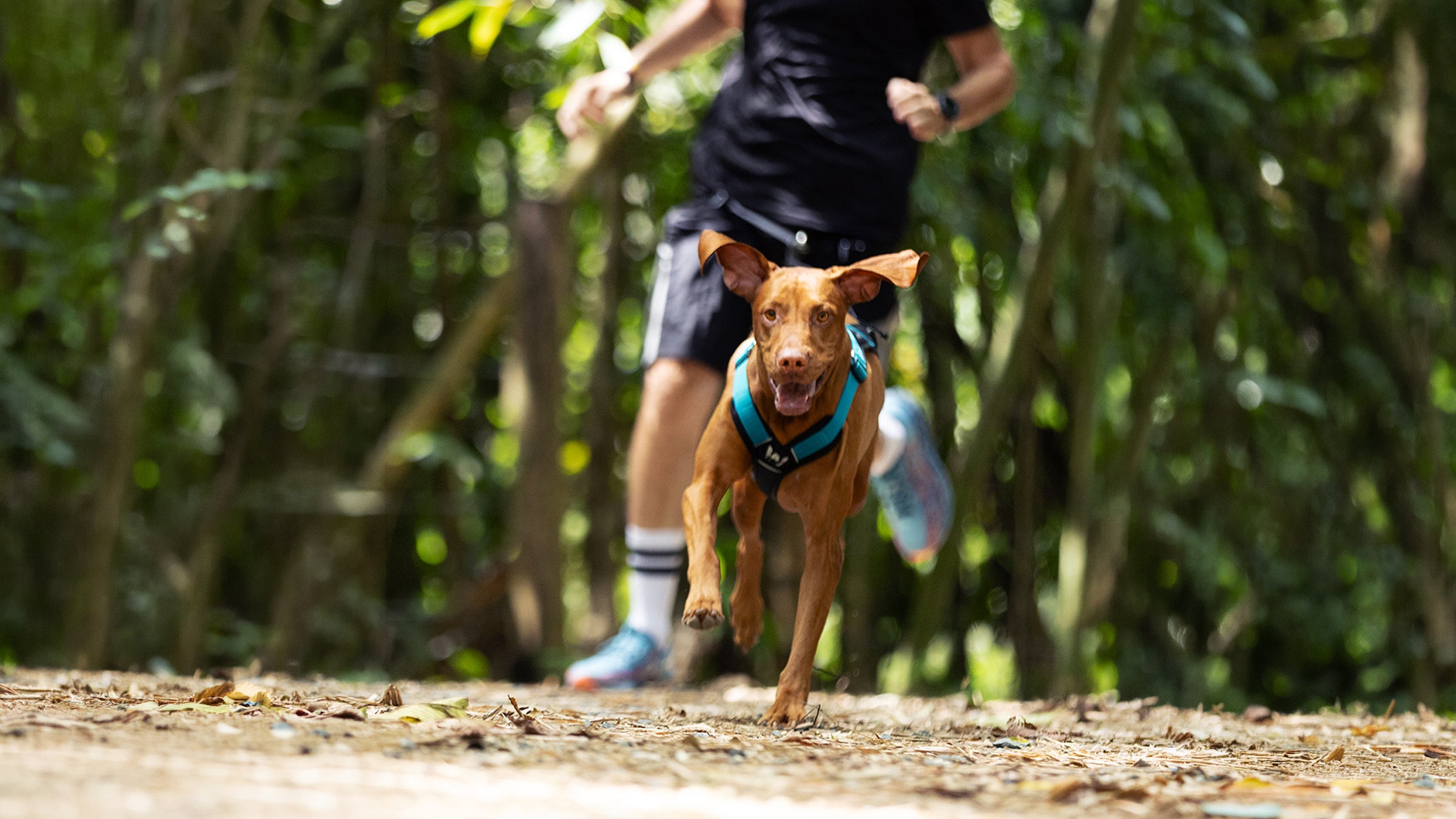
Complete Canicross Guide: Gear, Training & Safety for Running with Your Dog

Canicross is more than going for a jog with your dog. It is a sport in which dog and runner move together while connected through purpose-built gear: an appropriate pulling harness for the dog, a bungee line and a running belt for the person.

When introduced progressively and practiced in suitable conditions, canicross can provide structured exercise, shared outdoor time and a rewarding way to work as a team. It also requires preparation, appropriate gear and attention to your dog’s individual fitness and comfort.

For sustained pulling, the setup should be designed for the biomechanics of running under tension rather than improvised from everyday walking gear. The dog needs freedom of movement, stable fit and appropriate force distribution.

In this guide, we explain what canicross is, what gear you need, how to choose a harness, how to begin training and what precautions to consider when running with your dog.

If you’re already looking for harnesses, bungee lines and accessories for the sport, explore our canicross gear.

Related canicross guides

Use this as your main starting point. For more detail on specific topics, explore these related guides:

How to Choose a Canicross Harness

Learn what to look for in a harness for running under tension: movement, fit, durability, comfort and appropriate construction.

Canicross Gear: Harness, Bungee Line & Running Belt

Understand the three core pieces of a canicross system and how they work together for more controlled, comfortable movement.

Canicross Harness vs Walking Harness

See why a harness designed for everyday walking is not necessarily designed for sustained pulling, and when each type makes sense.

How to Start Canicross with Your Dog

A practical guide to building the activity gradually, avoiding common mistakes and respecting your dog’s pace.

Common Canicross Mistakes

Learn the most common mistakes when running with a dog and how to avoid them from the first training sessions.

Which Dogs Are Well Suited to Canicross?

Explore the traits that often suit the sport and why health, build, fitness and motivation matter more than breed alone.

Canicross in Colombia

Practical considerations for canicross across Colombia’s different climates, elevations and terrain.

How to Care for Your Dog’s Paws After Running or Canicross

Tips for checking paw pads, spotting irritation and caring for your dog after training.

What is canicross?

Canicross is a sport in which a person runs with a dog while the two are connected by a bungee line. The dog typically runs ahead while the runner follows and works with the dog’s rhythm.

Unlike an everyday walk, canicross involves more dynamic movement and, in traditional canicross, controlled forward pulling. The goal is not to force a dog to run or drag the dog along. Dog and runner should work as a team, with communication, appropriate conditioning and attention to the dog’s willingness to participate.

Because the system operates under tension, purpose-built equipment matters. A dedicated setup can help manage changes in pace and distribute loads more appropriately than a rigid handheld leash.

For a deeper comparison, read our guide to canicross harnesses vs walking harnesses.

Benefits of canicross for active dogs

Some active dogs enjoy structured activities that go beyond a routine walk. When appropriate for the individual dog, canicross can provide:

  • Structured physical activity.
  • Shared training and outdoor time.
  • Progressive fitness work for dog and runner.
  • Practice with cues, focus and pacing.
  • A consistent sport routine.
  • Mental engagement for high-energy dogs.
  • A way to explore suitable trails and open spaces together.

Breeds such as Border Collies, Huskies, Belgian Shepherds, German Shepherds, pointing breeds and Labradors are often associated with active sports, but breed alone does not determine suitability. Age, physical development, health, body condition, anatomy and motivation matter more.

Canicross should not be used simply to exhaust a dog. Build the activity progressively and pay attention to breathing, temperature, gait, motivation and recovery.

For more detail, read our guide to dogs and breeds suited to canicross.

What gear do you need for canicross?

A basic canicross setup has three main pieces:

  • A suitable pulling harness for the dog.
  • A bungee line.
  • A running belt for the person.

These pieces work as a system. Compatibility, fit and correct use all matter.

Depending on where and when you run, other useful items can include visibility lights, identification, a tracker, water and paw-care supplies.

For a closer look, read our guide to canicross gear: harness, bungee line and running belt.

You can also explore our canicross gear.

Canicross harness

The harness is one of the most important parts of the system. For canicross, it should allow the dog to run under forward tension without concentrating load on the neck or unnecessarily restricting shoulder movement.

A well-designed canicross harness should offer:

  • Fit appropriate to the dog’s body.
  • Room for natural shoulder and scapular movement.
  • Durable materials and attachment points.
  • Comfortable contact zones.
  • Stability while moving under tension.
  • Geometry intended for running and pulling, not only walking.

It is not enough for a harness simply to “fit.” It also needs to sit correctly while the dog is moving and pulling forward.

An everyday walking harness can be excellent for walks or non-pulling runs, but it may not be designed for sustained canicross tension.

For more detail, read our guide on how to choose a canicross harness.

Bungee line

The bungee line connects the dog to the runner. Unlike a rigid leash, it includes an elastic section designed to soften changes in tension as the dog accelerates, slows or changes pace.

This can make movement smoother for both partners and reduce abrupt loading compared with a rigid connection.

A bungee line is not simply a longer leash; it is a functional part of a canicross system and should be used according to its design and length.

Running belt for the person

A canicross belt lets the runner keep both hands free and is designed to distribute pulling forces around the hips or pelvis rather than relying on an arm-held leash.

That setup can support more natural running mechanics and better balance on appropriate trails, hills and uneven surfaces.

For regular canicross, a purpose-built belt paired with the correct bungee line and dog harness provides a more integrated system than holding a rigid leash in one hand.

How to choose a canicross harness

The right harness should match your dog’s anatomy and the demands of running under tension.

Look for stable fit, comfortable contact areas and enough freedom for normal gait. The harness should stay positioned during movement without excessive rotation, rubbing or pressure on sensitive areas.

Consider these points:

Freedom of movement

The harness should not unnecessarily block the shoulders or interfere with the natural extension of the front legs. Movement is especially important in a running sport.

Secure fit

The harness should be neither excessively loose nor tight. Too much movement can cause rubbing or instability, while an overly tight fit can create discomfort or restrict motion.

Force distribution

Pulling force should not be concentrated on the neck. A canicross harness should distribute load across body areas appropriate to its design while allowing normal breathing and gait.

Durable materials

Canicross gear is exposed to repeated tension, sweat, dirt, mud and frequent movement. Materials, stitching and attachment points should be selected for sport use and inspected regularly.

Comfort over longer distances

Contact areas should minimize unnecessary rubbing. This is especially important for short-coated or sensitive dogs and as training duration increases.

Ventilation and weight

In warm or humid conditions, harness coverage, weight and ventilation matter. Heavy gear can add heat load, but the most important step is to avoid strenuous exercise when temperature and humidity are not suitable for your dog.

For a fuller explanation, read our guide on how to choose a canicross harness.

Canicross vs running with a regular leash

Many people first run with their dog using a standard leash. For easy, non-pulling jogging this may be workable when the dog is comfortable and under control, but it is different from canicross.

A rigid leash does not provide the elastic tension management of a canicross bungee line, and holding it in one hand changes arm movement and balance.

A canicross system is designed to connect dog and runner while allowing more controlled movement under forward tension.

On an everyday walk or casual jog, the goal is usually loose-leash movement and control.

In canicross, the dog is normally encouraged to run ahead and pull in a controlled way while the system manages tension.

If you plan to practice canicross regularly, use gear designed for the sport rather than improvising a pulling setup from everyday walking equipment.

For more detail, read our guide to canicross harnesses vs walking harnesses.

How to start canicross with your dog

One of the most common mistakes is doing too much too soon. Build canicross gradually, especially if your dog is not conditioned for sustained running.

1. Check whether your dog is ready

Before starting, consider your dog’s health, physical development and current conditioning. If your dog is very young, senior, brachycephalic, overweight, has a history of injury, or shows joint, breathing or cardiovascular concerns, speak with your veterinarian before beginning strenuous running or pulling work.

2. Introduce the gear gradually

Before running, let your dog become comfortable wearing the harness and moving while connected to the line. Start with short, calm sessions so the equipment becomes familiar without pressure to perform.

3. Start with active walking

You do not need to run on day one. Begin with brisk walks, gentle pace changes and short routes while observing how your dog responds.

4. Add short running intervals

Use brief intervals: walk, jog for a short period, then return to walking. Watch your dog’s breathing, gait, posture, motivation and recovery rather than focusing only on distance.

5. Teach simple directional and pace cues

Canicross also depends on communication. Useful cues can include:

  • Go.
  • Stop.
  • Easy.
  • Left.
  • Right.
  • Wait.

Consistent cues can improve coordination on trails, in parks and around other people or dogs. Train them progressively in lower-distraction environments first.

6. Increase distance gradually

Avoid increasing distance, speed and terrain difficulty all at once. Progress one variable at a time and allow recovery between harder sessions.

A highly motivated dog may continue running even when fatigue is building, so do not use enthusiasm alone as a measure of readiness.

For a step-by-step progression, read our guide on how to start canicross with your dog.

Common canicross mistakes

Canicross can be a rewarding activity, but poor preparation or unsuitable conditions can create avoidable risks.

Common mistakes include:

  • Using a harness that restricts movement or is not designed for pulling.
  • Using a rigid leash for sustained pulling instead of an appropriate bungee line.
  • Starting with long distances before conditioning.
  • Running in excessive heat or humidity.
  • Failing to check paw pads after training.
  • Not planning access to water and appropriate breaks.
  • Continuing when the dog shows unusual fatigue, discomfort or reluctance.
  • Running on hot pavement or abrasive surfaces without assessing conditions.
  • Going to busy or technical trails before basic cues are reliable.

Canicross safety depends on more than the gear itself. Fit, conditioning, weather, terrain, handling and your dog’s individual response all matter.

Read more in our guide to common canicross mistakes.

Canicross in Colombia: climate, terrain & practical considerations

Canicross in Colombia requires extra attention to local conditions because temperature, humidity, elevation and terrain vary dramatically by region.

Running conditions in Bogotá are very different from those in Cali, Medellín, Barranquilla, Villavicencio or Cartagena.

In warm locations, strenuous running may need to be limited to the coolest suitable periods of the day—or postponed entirely when heat and humidity remain high. Dogs primarily cool themselves by panting, so heat load can rise quickly during exercise.

Check the ground as well as the air temperature. Avoid hot pavement and surfaces that could burn or irritate paw pads; a quick touch test is not a guarantee that a surface is safe.

Mountain terrain, trails and wet environments create different challenges. Consider footing, visibility, hydration, equipment fit, friction points and route difficulty.

Canicross is an outdoor sport that requires preparation, appropriate equipment and ongoing assessment of the environment.

For more local context, read Canicross in Colombia: Climate, Terrain & Recommendations.

Canicross FAQs for Beginners

Answers to common questions about preparation, training, equipment and suitable conditions for running with your dog.

What is canicross, and how is it different from jogging with my dog?

Canicross is a sport in which dog and runner are normally connected through a pulling harness, bungee line and running belt. Unlike occasional jogging on a standard leash, traditional canicross involves controlled forward pulling and benefits from progressive conditioning, communication and equipment designed for movement under tension.

How do I know if my dog is ready to start canicross?

Consider age, physical development, body condition, health, motivation and previous running experience. Begin with active walks and short jogging intervals. If your dog has a medical history, excess weight, breathing difficulty, pain or joint concerns, consult a veterinarian before beginning strenuous running or pulling work.

At what age can a dog start canicross?

Demanding running and pulling work should wait until the dog has reached appropriate physical development. Timing varies with size, breed, growth and individual health, so there is no single age that is right for every dog. Ask your veterinarian if you are unsure about your dog’s development or readiness.

What basic gear do I need for canicross?

A basic system includes a harness designed for running under pulling tension, a bungee line that helps manage changes in pace and a running belt for the person. The three pieces should be compatible, correctly fitted and used according to their intended purpose.

What should the first canicross training session look like?

Start with walking in the equipment so your dog can become familiar with it. Then add short jogging intervals separated by walking. Practice simple cues and increase only one variable at a time: distance, speed or terrain difficulty.

Can you practice canicross in warm climates?

Heat and humidity increase the risk of overheating during strenuous exercise. Choose only suitably cool conditions, reduce intensity and duration, provide water and breaks, and avoid hot ground surfaces. If conditions remain too warm or humid for your dog, postpone the session.

What signs mean I should stop the training session?

Stop if you notice marked breathing difficulty, loss of coordination, limping, refusal to continue, disorientation, weakness or unusual fatigue. Move to an appropriate resting environment and seek veterinary attention promptly if symptoms are severe or do not resolve quickly.

What should I check after running with my dog?

Check paw pads, nails, armpits and other harness contact areas for rubbing, cuts, tenderness or limping. Also inspect the harness, bungee line, stitching and connection points before storing the gear.