Identification
Provides a place for an ID tag or a tracker compatible with the collar design.


WUFTREK GUIDE
Compare collar types, materials, sizes and uses to choose a safe, comfortable option that fits your dog’s anatomy, behavior and routine.

EVERYDAY USE
A collar is a practical way to carry identification and can be used for calm walks when a dog moves with good control. It can also support basic handling routines when the size, material and fit are appropriate.
Provides a place for an ID tag or a tracker compatible with the collar design.
Can work as the leash connection point for dogs that do not pull and walk with control.
A lightweight, practical option for everyday routines and urban outings.
Reflective elements can help improve visibility in low-light conditions.
QUICK DECISION
The right choice depends on your dog’s behavior, anatomy and strength, as well as the activity.
A COLLAR MAY WORK BETTER
A HARNESS MAY WORK BETTER
GENERAL COMPARISON
There is no single best collar for every dog. The design should match the main need and the environment where it will be used.
| Collar type | Main use | Recommended for | Before choosing |
|---|---|---|---|
| Flat or adjustable | Identification and calm walks. | Everyday use and dogs with good leash control. | Make sure the buckle, ring and adjustment are appropriate. |
| Wide collar for large dogs | More support surface and close control. | Large, strong or muscular dogs. | Width, comfort, stitching and control handle. |
| With tracker compartment | Carries a compatible device discreetly. | Explorative dogs and owners looking for extra peace of mind. | Compatibility, closure and device position. |
| Reflective | Helps improve visibility in low-light conditions. | City walks, dawn, nighttime and traffic areas. | Reflective elements complement, but do not replace, a light. |
| Biothane | Water, mud, rain and frequent cleaning. | Adventure dogs and humid climates. | Hardware, rivets and material condition. |
| Martingale | Specific handling with limited tightening. | Situations where a responsible trainer recommends it. | Fit, supervision and correct handling technique. |
WUFTREK MODELS
Compare each model’s main function before choosing a color or appearance.
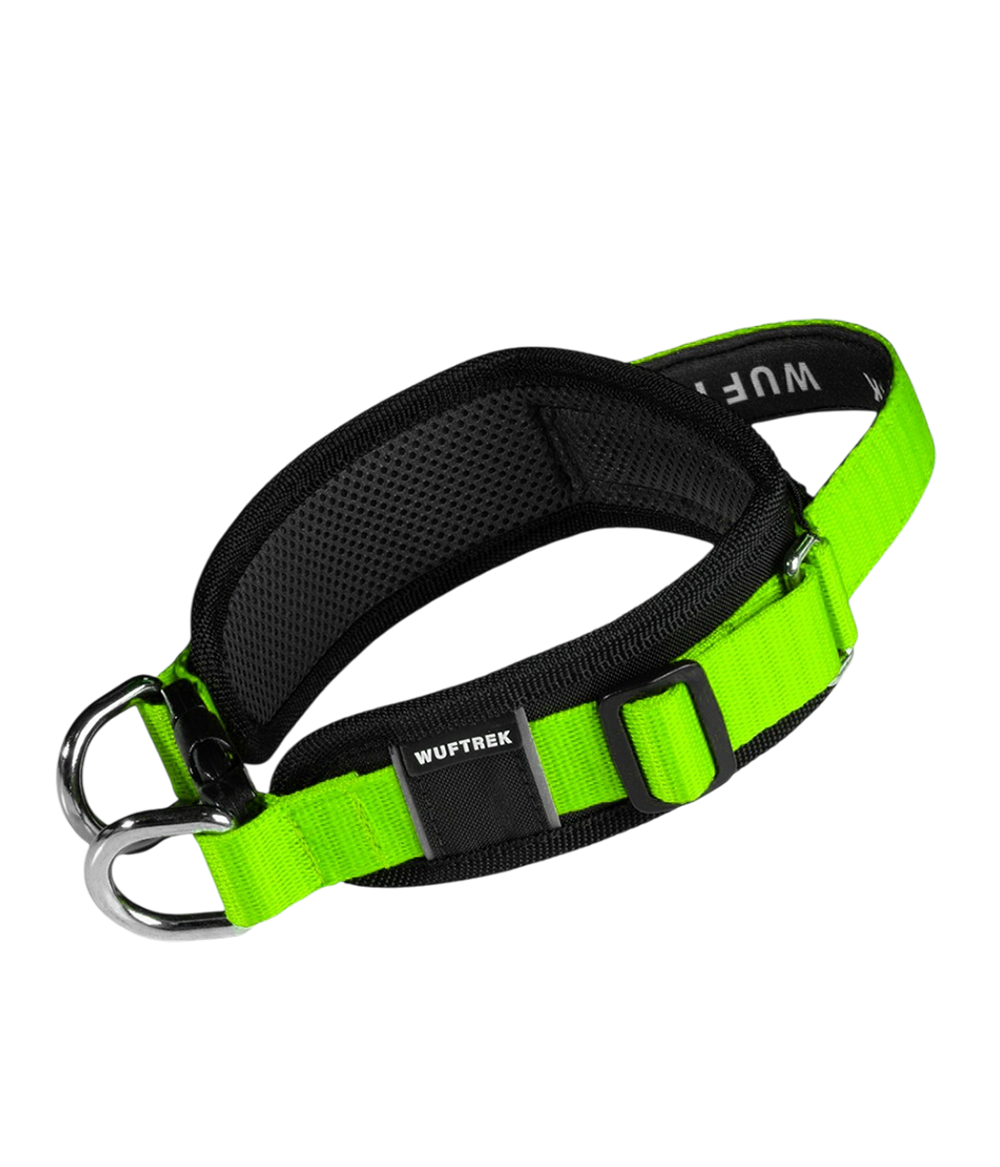
WIDE COLLAR
Designed for large dogs that need a stable structure, rear handle and a compartment for a compatible tracker.
Best for: large, strong or explorative dogs.
Shop MaxTrek Find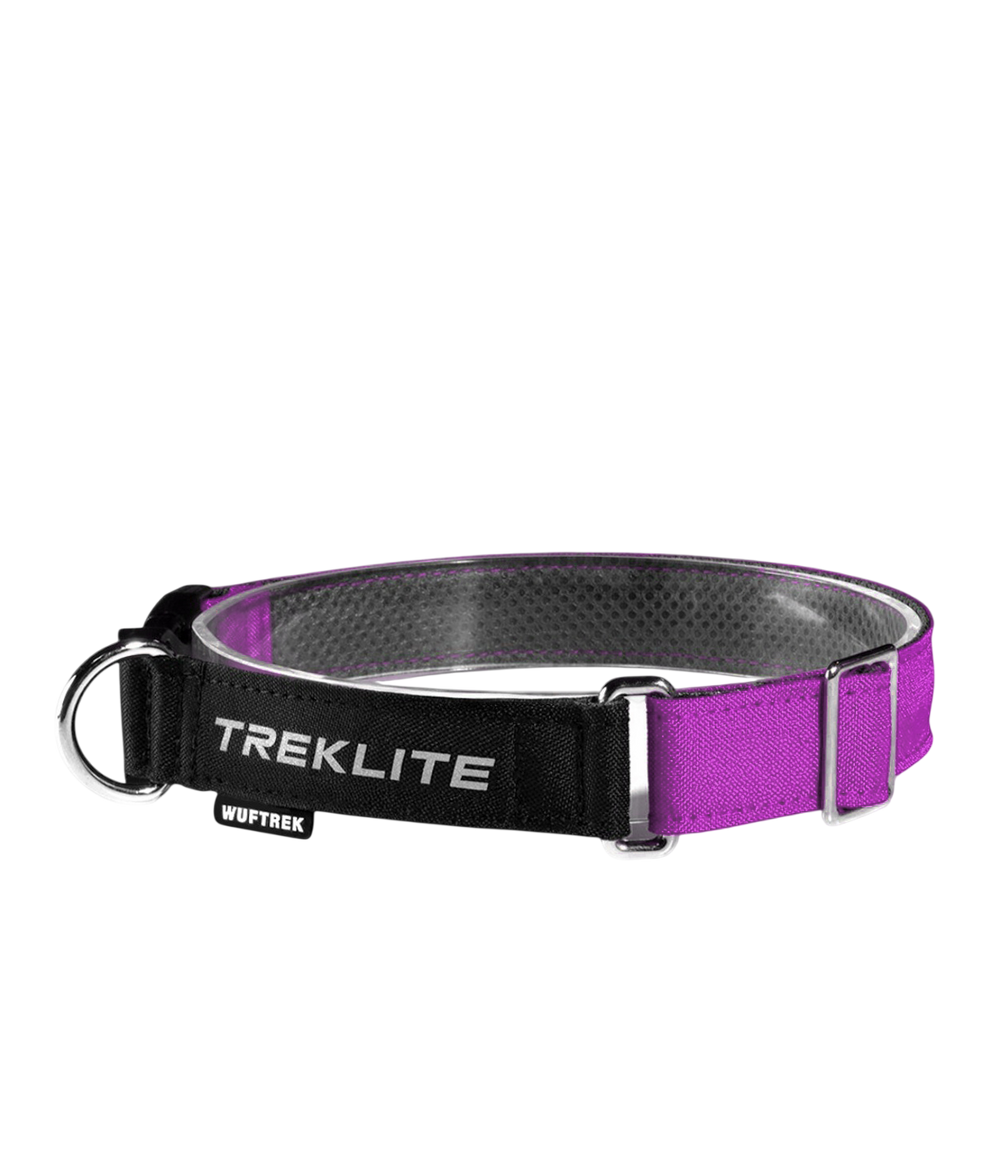
HIGH VISIBILITY
A lightweight everyday collar with reflective webbing that helps improve visibility on dawn or nighttime walks.
Best for: daily walks and low-light conditions.
Shop TrekLite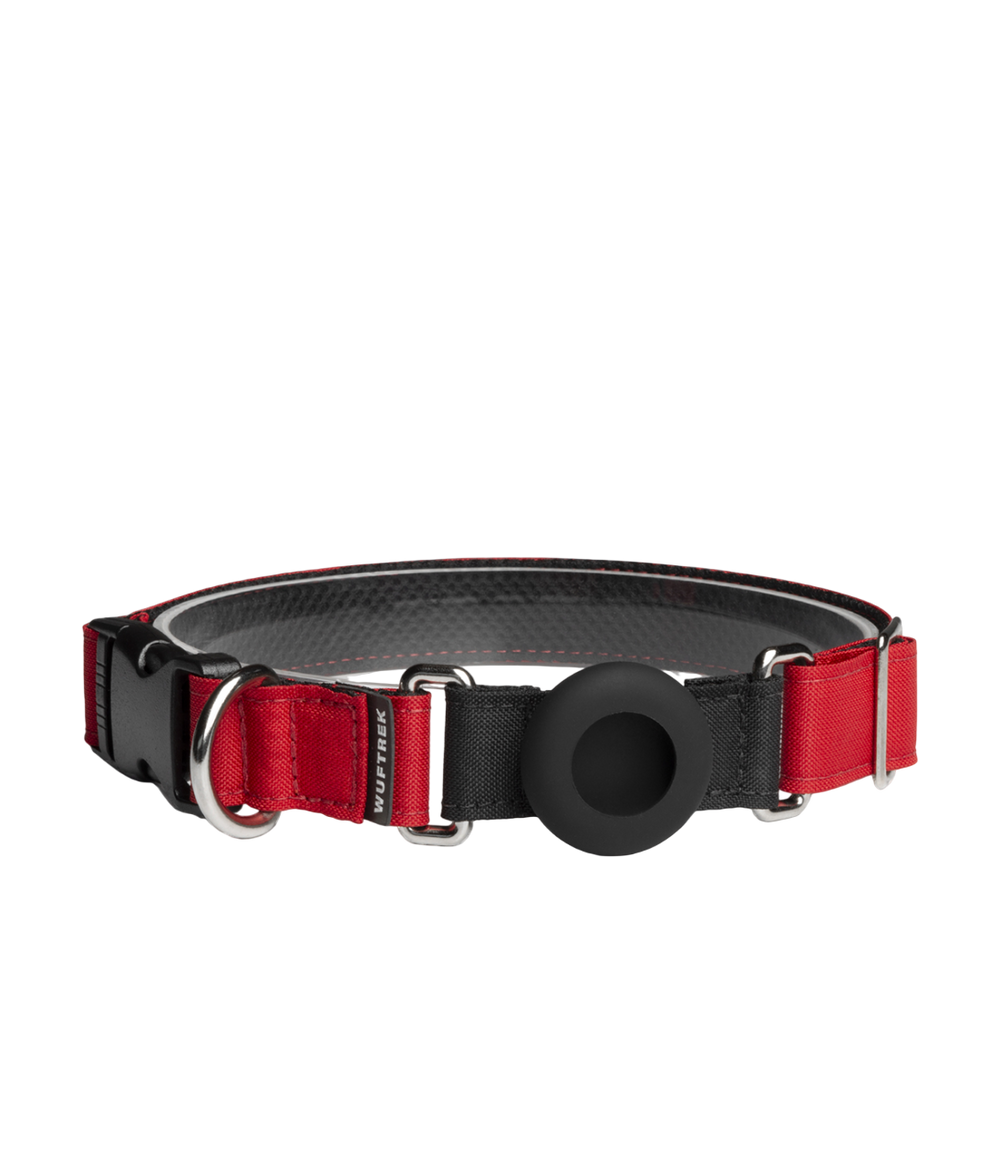
TRACKING
Includes an integrated AirTag case so the device can be carried securely, discreetly and protected during everyday use.
Best for: active dogs or dogs that tend to explore.
Shop TagTrek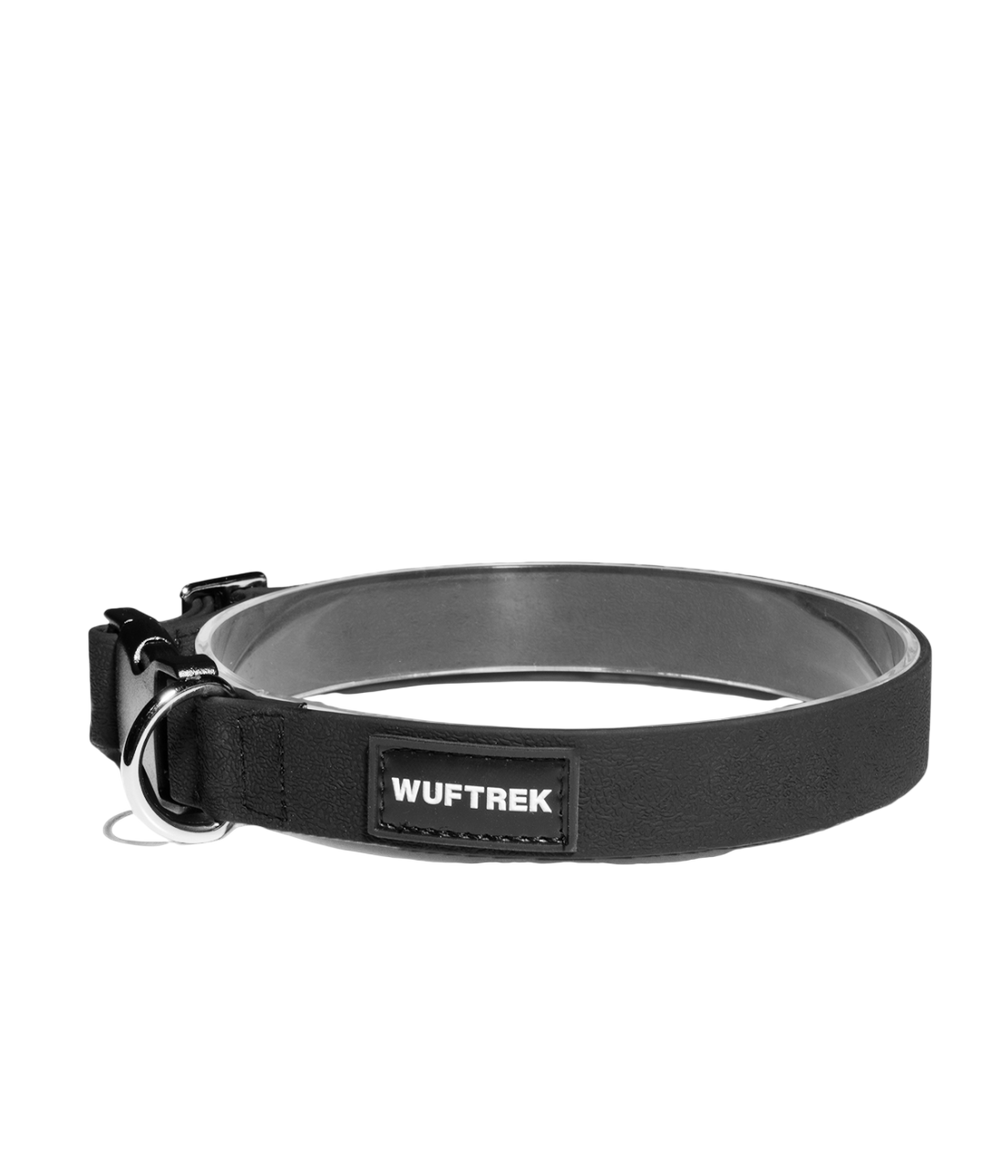
WATER & MUD
A low-absorption, easy-clean option for dogs that get wet often or enjoy outdoor activities.
Best for: rain, mud, beach trips and humid climates.
Shop Biothane CollarMATERIALS & ENVIRONMENT
Material affects comfort, durability, cleaning and how the collar responds to water, sunlight and friction.
Balances strength, flexibility and light weight. It is practical for everyday use and holds its shape well.
Everyday useLightweight and versatile. Check friction areas, stitching and the buckle periodically.
Urban walksOffers low absorption and easy cleaning, which is useful around water, mud and humid conditions.
Outdoor & wet conditionsHelp improve visibility when light hits them. They complement other visibility and safety equipment.
Night & cityWant to go deeper? Read our guide to dog collar materials by climate and use.
FIT IS PART OF SAFETY
Do not choose only by breed or weight. Two similar dogs can have different neck circumferences.
Wrap a flexible tape around the area where the collar will sit, without tightening it.
Use the chart for the specific model. Do not assume all brands use the same sizing.
As a starting point, two fingers should fit without leaving the collar loose or able to shift excessively.
RESPONSIBLE USE
A collar can be safe when the design, size and use are appropriate. Check the fit, avoid constant pulling against the neck and watch for any signs of discomfort.
Read the safety guideBEFORE HEADING OUT
FREQUENTLY ASKED QUESTIONS
It can be used to carry an identification tag and to attach a leash during calm walks when the dog moves with good control. If the dog pulls hard or participates in sports, an appropriate harness may be a better option.
Yes. The collar can carry identification while the leash attaches to the harness. This combination keeps the collar for the ID tag and uses the harness as the main connection point.
Use a flexible tape around the area where the collar will sit, without tightening it or leaving too much space. Compare that measurement with the model’s size chart and do not choose based only on breed or weight.
A collar that is too tight can leave marks, chafe or cause discomfort. If it is too loose, it can shift or slip over the dog’s head. Check the fit regularly, especially for growing dogs.
Choose the material according to the routine. Textiles are practical for everyday use, low-absorption materials are easier to clean after water or mud, and reflective elements help improve visibility.
Regularly check the stitching, buckle, ring, adjusters and friction areas. Also recheck the fit after washing or changes in your dog’s weight.
Replace it if you find loose stitching, cuts, deformation, a buckle that does not close correctly, a damaged ring or wear that could affect how it functions.
CHOOSE FOR THE ROUTINE
Compare models, materials and functions, check the size and choose what your dog actually needs.